01 TuttleLab

Research.

02 Overarching philosophy

Reducing
Molecular Search Spaces

We use computation to understand the molecular processes that govern behaviour, narrow the space of possibilities, and help direct experiment towards the most promising regions of chemical space.

This common philosophy connects all of our research. The scientific question comes first; computation provides a route from a vast landscape of possible structures, pathways and properties to the possibilities that matter.

01 / Research area

Functional Molecular & Biomaterial Systems

We study how molecular interactions develop into collective structure, behaviour and function across molecularly organised materials.

This area spans molecular self-assembly and supramolecular systems, peptides and minimal proteins, and multicomponent systems. It extends through biomaterials, mineralisation and hierarchical materials to functional fibres and related organised materials, where composition, environment and dynamics act together across length scales.

Representative focus

  • Molecular self-assembly & supramolecular systems
  • Peptides, minimal proteins & multicomponent systems
  • Biomaterials, mineralisation & hierarchical materials
  • Functional fibres & molecularly organised materials
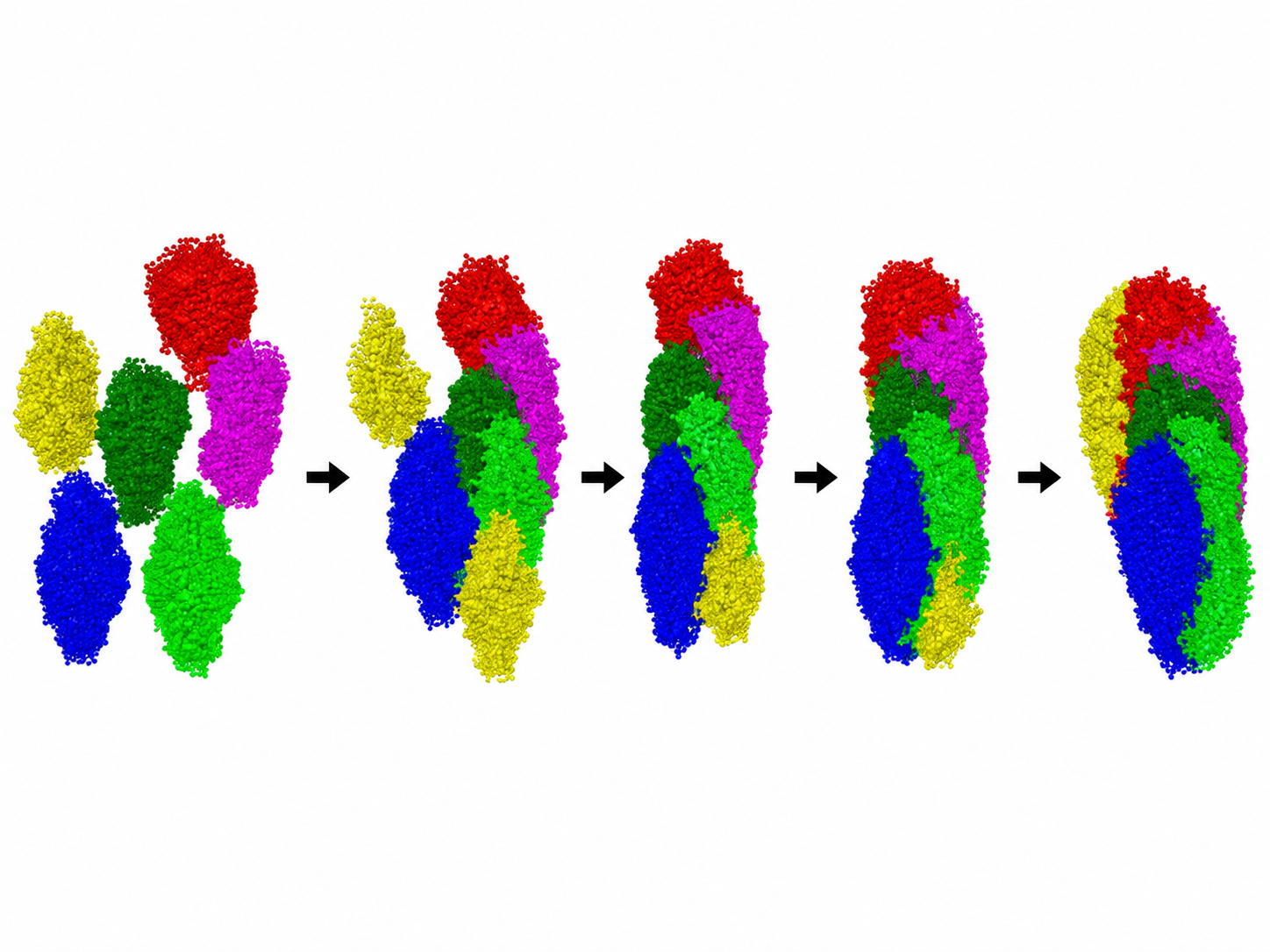
Sequence showing six molecular filaments assembling into a combined structure

02 / Research area

Reactivity & Catalysis

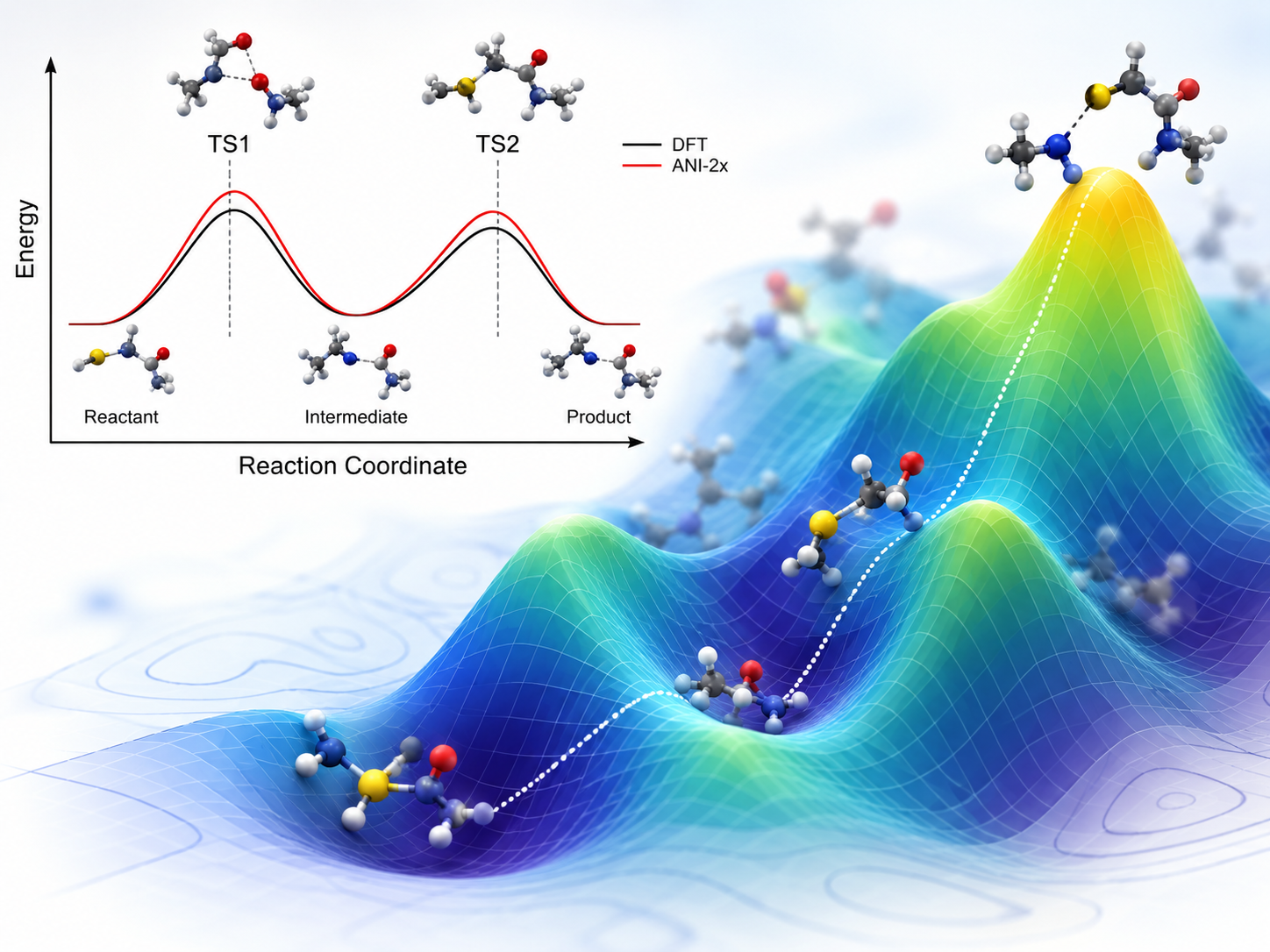
We use computation to understand and predict how chemical transformations proceed.

Reaction mechanisms, transition states and competing reactive pathways are examined in the context of free-energy landscapes. By connecting molecular structure to catalytic processes, this work aims to identify the factors that govern reactivity and determine which pathways are accessible.

Representative focus

  • Reaction mechanisms & transition states
  • Reactive pathways & free-energy landscapes
  • Catalytic processes
  • Computational prediction of chemical reactivity
Reaction coordinate and molecular pathway across a free-energy landscape

03 / Research area

Molecular Property Prediction

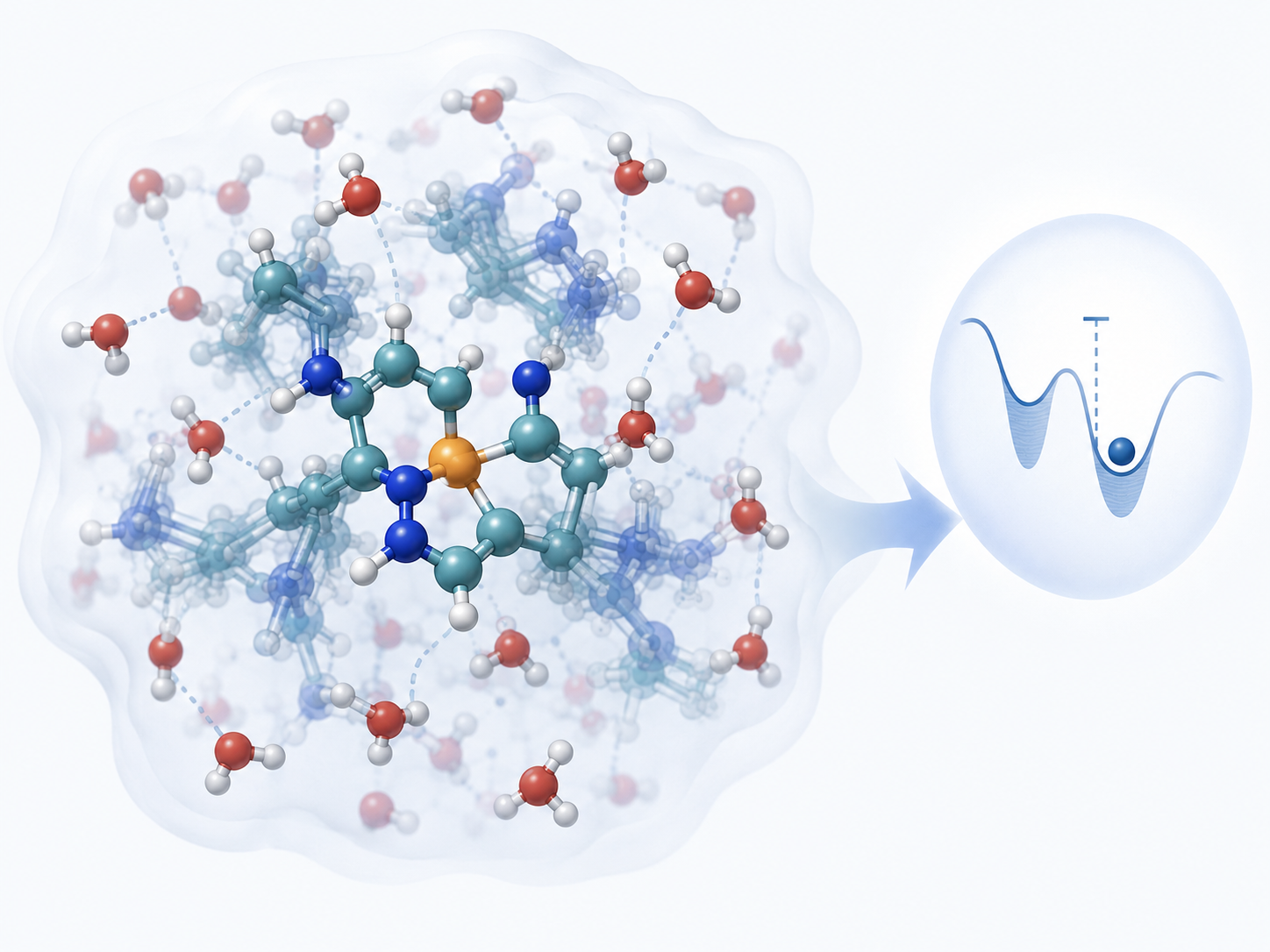
We investigate how molecular structure and dynamics combine to produce properties and function.

This area includes molecular and thermodynamic property prediction, conformational ensembles and structure–property relationships. It also encompasses molecular recognition, formulation behaviour, and the ways in which changing molecular structure or dynamics changes the behaviour of the wider system.

Representative focus

  • Molecular & thermodynamic properties
  • Conformational ensembles
  • Structure–property relationships & molecular recognition
  • Formulation behaviour, dynamics & function
Molecular ensemble in solution linked to a property energy profile

03 Shared toolkit

How we reduce the search space

Electronic-structure methods and molecular simulation remain core to the lab. Data generation, machine learning and close experimental collaboration extend that foundation, helping us decide where to look next across all three research areas.

01 / Core methods

Electronic structure & molecular simulation

DFT and quantum-chemical methods, molecular dynamics, enhanced sampling and coarse-grained modelling.

02

Data generation & high-throughput computation

Systematic exploration of conformational, reactive and chemical spaces and the creation of computational datasets.

03

Machine learning & AI

Neural-network potentials, predictive models, active learning and approaches for exploring large chemical spaces.

04

Integrated discovery

Iterative links between simulation, data, machine learning and experiment, developed through close collaboration with experimental researchers.